- News ›
- Is Gamma Knife Surgery? Understanding Stereotactic Radiosurgery
Is Gamma Knife Surgery? Understanding Stereotactic Radiosurgery
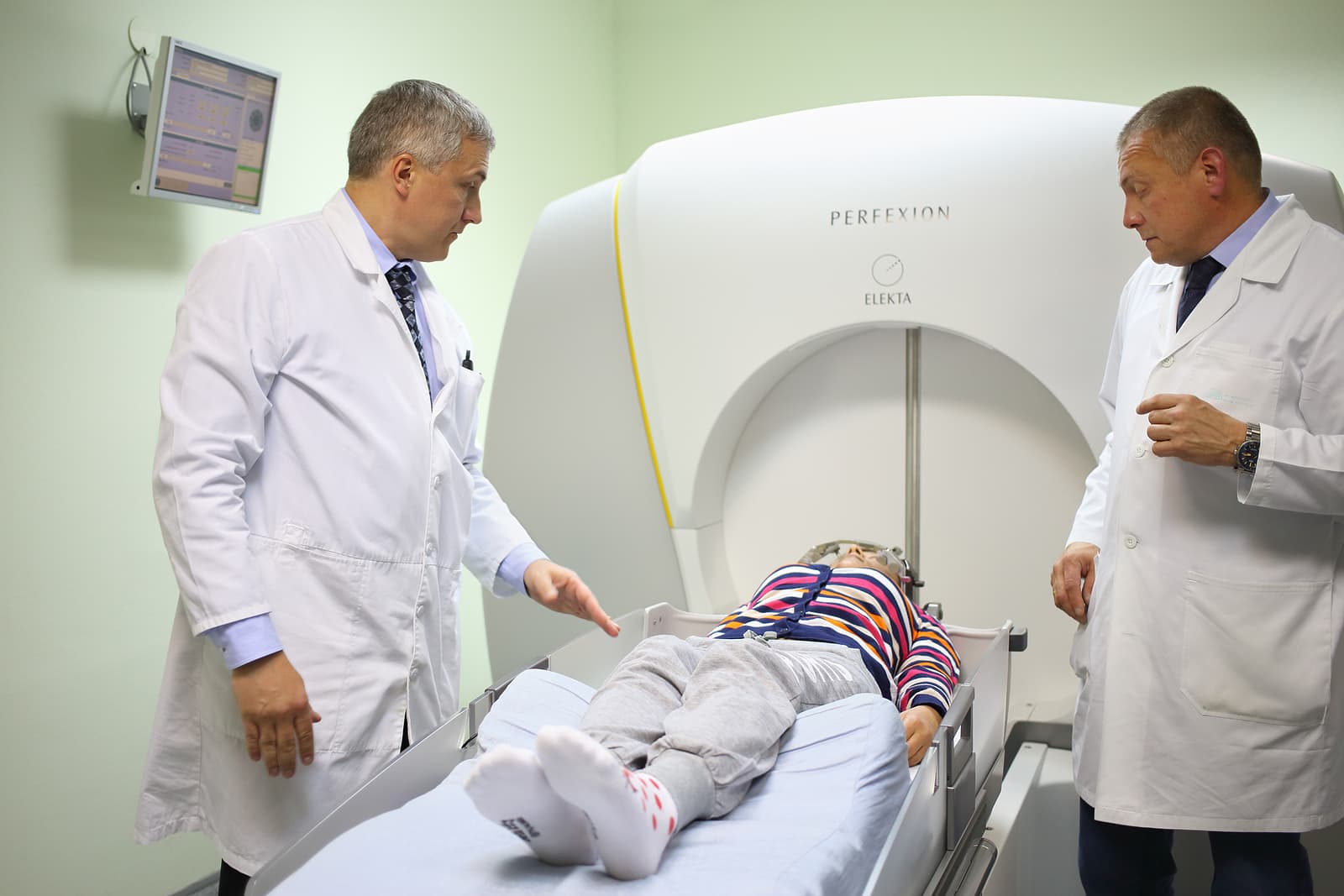
Despite its name, Gamma Knife is not surgery in the traditional sense. It is a highly precise form of radiotherapy called stereotactic radiosurgery (SRS). Focused radiation beams are used to treat a specific area of the brain, without making an incision or opening the skull.
The word ‘surgery’ can therefore be confusing for patients who have been told that Gamma Knife surgery may be an option. Understanding what the treatment involves, and how it differs from conventional brain surgery, can make the treatment pathway easier to navigate.
Instead of physically removing a tumour or lesion, multiple radiation beams are focused on the treatment area. Individually, the beams have a relatively low effect on the tissue they pass through, while their combined dose is concentrated at the planned target.
Detailed imaging and computerised treatment planning allow the team to define the target and plan the radiation dose with a high degree of precision.
The treatment can be used for a range of conditions, including certain brain tumours, vestibular schwannomas, meningiomas, brain metastases and some vascular conditions. Whether it is appropriate depends on the individual diagnosis and characteristics of the target.
Gamma Knife does not involve this type of surgical access. Instead, radiation is used to treat the target without physically removing it.
This distinction is important because Gamma Knife radiosurgery is still an active medical treatment and requires careful specialist assessment and planning. It should not be thought of simply as a scan or a procedure that requires no preparation.
Depending on the Gamma Knife system and the patient's circumstances, a stereotactic frame or specialised mask may be used to keep the head accurately positioned.
During treatment, the radiation is directed at the planned target. The patient remains awake in many cases and can communicate with the treatment team. Once treatment is complete, the positioning equipment is removed.
Gamma Knife treatment is often delivered in a single session, although stereotactic radiation can sometimes be delivered over several sessions depending on the treatment approach and clinical circumstances.
The suitability of Gamma Knife varies considerably between conditions. Factors such as the size and location of a tumour or lesion, its relationship to important structures and whether the patient has previously received treatment can all influence the decision.
For some patients, Gamma Knife may be an alternative to conventional surgery. For others, it may form part of a wider treatment plan, such as after previous surgery or alongside other forms of treatment.
The location and size of the target are particularly important because stereotactic radiosurgery is designed to treat a defined area with a high degree of precision.
The team must also consider nearby nerves and other sensitive structures, previous treatments and the expected benefits and risks.
Neither approach is automatically appropriate for every patient. The decision depends on the condition being treated and individual factors identified during specialist assessment.
For someone considering Gamma Knife, understanding that it is stereotactic radiosurgery rather than conventional surgery is a useful starting point. The next step is to establish whether the treatment is suitable for the particular diagnosis, target and circumstances.
Explore the Queen Square website to learn more about Gamma Knife stereotactic radiosurgery and how specialists assess patients for treatment.
The word ‘surgery’ can therefore be confusing for patients who have been told that Gamma Knife surgery may be an option. Understanding what the treatment involves, and how it differs from conventional brain surgery, can make the treatment pathway easier to navigate.
What is Gamma Knife radiosurgery?
Gamma Knife is a form of stereotactic radiosurgery designed to deliver radiation very accurately to a defined target in the brain.Instead of physically removing a tumour or lesion, multiple radiation beams are focused on the treatment area. Individually, the beams have a relatively low effect on the tissue they pass through, while their combined dose is concentrated at the planned target.
Detailed imaging and computerised treatment planning allow the team to define the target and plan the radiation dose with a high degree of precision.
The treatment can be used for a range of conditions, including certain brain tumours, vestibular schwannomas, meningiomas, brain metastases and some vascular conditions. Whether it is appropriate depends on the individual diagnosis and characteristics of the target.
Why is it called radiosurgery?
The term ‘radiosurgery’ describes the precision and therapeutic purpose of the treatment rather than conventional surgery. Traditional brain surgery involves making an incision and creating an opening in the skull so that a surgeon can access the brain or remove tissue.Gamma Knife does not involve this type of surgical access. Instead, radiation is used to treat the target without physically removing it.
This distinction is important because Gamma Knife radiosurgery is still an active medical treatment and requires careful specialist assessment and planning. It should not be thought of simply as a scan or a procedure that requires no preparation.
How does Gamma Knife treatment work?
Before treatment, the medical team uses detailed imaging, usually including MRI, to establish the precise size, shape and location of the target. These images are incorporated into an individual treatment plan.Depending on the Gamma Knife system and the patient's circumstances, a stereotactic frame or specialised mask may be used to keep the head accurately positioned.
During treatment, the radiation is directed at the planned target. The patient remains awake in many cases and can communicate with the treatment team. Once treatment is complete, the positioning equipment is removed.
Gamma Knife treatment is often delivered in a single session, although stereotactic radiation can sometimes be delivered over several sessions depending on the treatment approach and clinical circumstances.
What conditions can Gamma Knife treat?
Gamma Knife may be considered for several different types of brain condition. These can include certain:- Brain tumours
- Vestibular schwannomas
- Meningiomas
- Brain metastases
- Vascular malformations
- Facial pain conditions such as trigeminal neuralgia
The suitability of Gamma Knife varies considerably between conditions. Factors such as the size and location of a tumour or lesion, its relationship to important structures and whether the patient has previously received treatment can all influence the decision.
For some patients, Gamma Knife may be an alternative to conventional surgery. For others, it may form part of a wider treatment plan, such as after previous surgery or alongside other forms of treatment.
How do doctors decide if Gamma Knife is suitable?
There is no single set of criteria that applies to everyone. A specialist team will review the diagnosis, imaging and wider clinical circumstances before recommending treatment.The location and size of the target are particularly important because stereotactic radiosurgery is designed to treat a defined area with a high degree of precision.
The team must also consider nearby nerves and other sensitive structures, previous treatments and the expected benefits and risks.
Gamma Knife or traditional surgery?
The two approaches work in fundamentally different ways. Conventional surgery aims to access and potentially remove tissue, while Gamma Knife uses focused radiation to treat the target without opening the skull.Neither approach is automatically appropriate for every patient. The decision depends on the condition being treated and individual factors identified during specialist assessment.
For someone considering Gamma Knife, understanding that it is stereotactic radiosurgery rather than conventional surgery is a useful starting point. The next step is to establish whether the treatment is suitable for the particular diagnosis, target and circumstances.
Explore the Queen Square website to learn more about Gamma Knife stereotactic radiosurgery and how specialists assess patients for treatment.